Blogia
EASYFISQUIM , ESO i Batxillerat.

4ESO FiQ 2016-2017 ENGLISH (from article 47).

4ESO Física i Química , ARTICLE 82 : Vector parts 1.
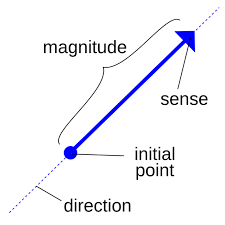
4ESO Física i Química ,  ARTICLE 82 :  Vector parts 1.
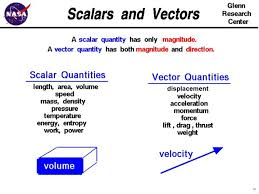
4ESO Física i Química , ARTICLE 81 : Scalar and vector mesurements.

4ESO Física i Química ,  ARTICLE 81 :  Scalar and vector mesurements.


 - Watch this video and compare scalar magnitude with vector mesurement :


   SCALAR AND VECTOR MESUREMENTS VIDEO.


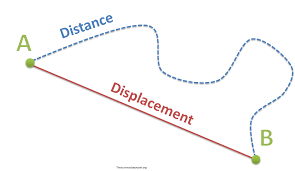
4ESO Física i Química , ARTICLE 80 : Doing a presentation about distance and displacement differences.

4ESO Física i Química , ARTICLE 80 :  Doing a presentation about distance and displacement differences.

- Watch these two videos in order to check properly what distance and displacement are.
   Later prepare with your classmate a presentation (it can be a powerpoint or a video) in which your team explain the differences between both concepts using an example as done in the following videos :

 
 * VIDEO 1 DISTANCE AND DISPLACEMENT.

 * VIDEO 2 DISTANCE AND DISPLACEMENT.


 BEFORE FINISHING YOUR POWERPOINT OR VIDEO DON’T FORGET TO MENTION IN YOUR WORK WHY ONE IS A VECTORIAL MAGNITUD AND THE OTHER A SCALAR ONE !!!


  - I post here a video where I am explaining to you, more or less, what you have to tell at your work or PowerPoint on Friday :


      VIDEO ABOUT ME EXPLAINING THE ISSUE TO YOU  ( in spanish  ).


4ESO Física i Química , ARTICLE 79 : HOMEWORK FOR THE WEEKEND 19-11-16.

4ESO Física i Química ,  ARTICLE 79 :  HOMEWORK FOR THE WEEKEND 19-11-16.


 - For this weekend you have to read article 78 and watch the 3 videos that are posted there about Kinematics (physics).

(Ten en cuenta que en los videos, si le das a configuración puedes poner subtítulos en castellano, por si en algún video te parece que hablan demasiado rápido).


4ESO Física i Química , ARTICLE 78 : Physics. Unit 1. KINEMATICS.

4ESO Física i Química ,  ARTICLE 78 :  Physics. Unit 1. KINEMATICS.


                                                               PHYSICS


                                           KINEMATICS UNIT. (Cinemática).

  
    - What do you know about kinematics ? : It is the study of motion and its causes.
 
             From Wikipedia we see that ... :

Kinematics is the branch of classical mechanics which describes the motion of points (alternatively "particles"), bodies (objects), and systems of bodies without consideration of the masses of those objects nor the forces that may have caused the motion.[1][2][3] Kinematics as a field of study is often referred to as the "geometry of motion" and as such may be seen as a branch of mathematics.[4][5][6] Kinematics begins with a description of the geometry of the system and the initial conditions of known values of the position, velocity and or acceleration of various points that are a part of the system, then from geometrical arguments it can determine the position, the velocity and the acceleration of any part of the system. The study of the influence of forces acting on masses falls within the purview of kinetics. For further details, see analytical dynamics.

Kinematics is used in astrophysics to describe the motion of celestial bodies and collections of such bodies. In mechanical engineering, robotics, and biomechanics[7] kinematics is used to describe the motion of systems composed of joined parts (multi-link systems) such as an engine, a robotic arm or the skeleton of the human body.


   1. INTRODUCTORY VIDEO ABOUT KINEMATICS.


   2. DISTANCE AND DISPLACEMENT VIDEO 1.


   3. DISTANCE AND DISPLACEMENT VIDEO 2.


 - IF YOU WANT TO STUDY ALL ABOUT KINEMATICS UNIT IN ADVANCE, GO AND READ AND LEARN THIS LINK :


                                              ALL KINEMATIC UNIT.


4ESO Física i Química , ARTICLE 77 : EXERCICES FOR PRACTICING FORMULATION AND NAMING IN SPANISH.

4ESO Física i Química ,  ARTICLE 77 :  EXERCICES FOR PRACTICING FORMULATION AND NAMING IN SPANISH.

- Here you have a webpage in SPANISH with exercices and explanation about formulation and naming of binary compounds. Use it for practicing :


 PÁGINA EN ESPAÑOL CON EJERCICIOS QUE EXPLICA FORMULACIÓN Y NOMENCLATURA DE COMPUESTOS BINARIOS (ÓXIDOS E HIDRUROS).


4ESO Física i Química , ARTICLE 76 : DIFFERENCE BETWEEN COVALENT AND MOLECULAR CRYSTALLS.

4ESO Física i Química ,  ARTICLE 76 :  DIFFERENCE BETWEEN COVALENT AND MOLECULAR CRYSTALLS.


- Because of the difficulties about highlighting differences between covalent and molecular crystalls I have posted here for you a video in SPANISH to be watched carefully and so understand what each one of crystalls consist of.


1) VIDEO EN ESPAÑOL SOBRE LAS DIFERENCIAS ENTRE CRISTAL COVALENTE Y CRISTAL MOLECULAR (sòlids moleculars).

2) REDES COVALENTES (sólids covalents).


3) SÒLIDS MOLECULARS.


4) Mirar este video que es un buen resumen (TIPUS DE CRISTALLS).


(watch the video carefully from the beginning and after minute 5:30 when the real difference is explained).


4ESO Física i Química , ARTICLE 75 : NAMING AND FORMULATION EXAM ON FRIDAY 18-11-16.

4ESO Física i Química ,  ARTICLE 75 :  NAMING AND FORMULATION EXAM ON FRIDAY 18-11-16.


NAMING AND FORMULATION EXAM ABOUT OXIDES AND HYDRIDES AND IONIC AND COVALENT BONDS, POLARITY AND HIDROGEN BOND AND IONIC, COVALENT AND MOLECULAR COMPOUNDS PROPERTIES WILL BE ON NEXT FRIDAY 18-11-16.