Blogia

EASYFISQUIM , ESO i Batxillerat.

4ESO Informàtica 2016-2017 : Article 12 : Treball GIMP de Noelia sobre personatges d'ANIME.

4ESO Informàtica 2016-2017 : Article 12 :  Treball GIMP de Noelia sobre personatges d'ANIME.


- Noelia ha fet un molt bon treball amb el programa de GIMP modificant la següent imatge del següent link a l'enllaç número 1 i transformant-la en la que es veu en aquest article i que es pot veure més gran en l'enllaç número 2.      Aquí els tens :


  Enllaç 1


  Enllaç 2


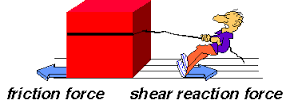
4ESO Física i Química : ARTICLE 129 : FRICTION FORCES AND NEWTON'S LAWS. Work to be done at the watch hours next week.

4ESO Física i Química : ARTICLE 129 :  FRICTION FORCES AND NEWTON'S LAWS.    Work to be done at the watch hours next week.


   - Next week, during the watch hours (horas de guardia) you will have to do the following tasks. Pay attention to them because they consist in a very important concept (friction).


  - TASK 1 :  Watch the following videos in order to remember the most important concepts about Newton’s laws we have already studied and after that watch the videos about friction because later you will try to achieve a few exercise with a friction force involved :


   - Video about Newton’s laws.


   - Video 1 about Friction forces.


   - Video 2 about Friction forces.


   - Video 3 about Friction forces.


   - Video 1 of a friction force excercise.   (Pay attention when watching this video!!)


   - Video 2 about friction force exercise.


   - TASK 2 :   * Because this friction force exercises are not the easiest at all, I’m gonna post for you a few videos in spanish in order to get them well understood :


- Video 1 en español para acabar de entender bien los ejercicios con fuerza de fricción.

- Video 2 en español para acabar de entender bien los ejercicios con fuerza de fricción.

- Video 3 en español con un ejercicio también de fuerza de fricción (nivel bachillerato).


   - TASK 3Read very carefully pages 63, 64 and 65 of your book about friction.
                                Look up and read carefully the examples done there on this pages.


   - TASK 4 :   - Do the exercises  10, 11, 12, 13 and 14  from pages  63, 64 and 65  of your book.


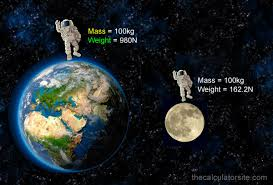
4ESO Física i Química : ARTICLE 128 : WEIGHT AND MASS DIFFERENCE. WEIGHT ON OTHER PLANETS.

4ESO Física i Química : ARTICLE 128 :   WEIGHT AND MASS DIFFERENCE.   WEIGHT ON OTHER PLANETS.


   - Weight on other different planets (video 0).


   - Weight, mass and gravity difference  (video 1).


   - Weight, mass and gravity difference (video 2).


   - Weight and mass difference (video 3).


   - Weight and mass difference  (video 4).


   - Weight and mass difference  (video 5).


   - Mass and weight  (video 6).


   - Mass and weight (video 7).


  - Now read a few definitions about the difference between mass and weight. After reading them try to write your own definition with your own words about the difference between mass and weight :


   Definition 1 :

In common usage, the mass of an object is often referred to as its weight, though these are in fact different concepts and quantities. In scientific contexts, mass refers loosely to the amount of "matter" in an object (though "matter" may be difficult to define), whereas weight refers to the force exerted on an object by gravity.[1] In other words, an object with a mass of 1.0 kilogram will weigh approximately 9.81 newtons on the surface of the Earth (its mass multiplied by the gravitational field strength).

(The newton is a unit of force, while the kilogram is a unit of mass.)

Its weight will be less on Mars (where gravity is weaker), more on Saturn, and negligible in space when far from any significant source of gravity, but it will always have the same mass.


 

    Definition 2 :

   A better scientific definition of mass is its description as being composed of inertia, which is the resistance of an object being accelerated when acted on by an external force. Gravitational "weight" is the force created when a mass is acted upon by a gravitational field and the object is not allowed to free-fall, but is supported or retarded by a mechanical force, such as the surface of a planet. Such a force constitutes weight.[2] This force can be added to by any other kind of force.
 

   Definition 3 :

While the weight of an object varies in proportion to the strength of the gravitational field, its mass is constant (ignoring relativistic effects) as long as no energy or matter is added to the object.[3] Accordingly, for an astronaut on a spacewalk in orbit (a free-fall), no effort is required to hold a communications satellite in front of him; it is "weightless". However, since objects in orbit retain their mass and inertia, an astronaut must exert ten times as much force to accelerate a 10‑ton satellite at the same rate as one with a mass of only 1 ton.

On Earth, a swing seat can demonstrate this relationship between force, mass, and acceleration. If one were to stand behind a large adult sitting stationary on a swing and give him a strong push, the adult would temporarily accelerate to a quite low speed, and then swing only a short distance before beginning to swing in the opposite direction. Applying the same impetus to a small child would produce a much greater speed.


  Definition 4 :

  Look this link up and read it !!


  Definition 5 :

  Look this link up too !!.


   * Have you really understood the difference ?  then...try to do these exercises :


      Wording  1: 

     You are on the earth and have a bag of apples which weights 85N.  If you were to carry
the bag of apples to the surface of the moon, where the gravitational field is
only 1.67 N/kg, how much would the apples weigh?


       Wording 2 :

      An 80 kg person on
top of Mt. Everest would weigh only 781.6 N. 
How strong is the Earth’s gravitational field on top of Mt. Everest?


        Wording 3 :

       If you went to the
moon, how much would you weigh?


ERASMUS PROJECTS " Let the science discover us " : Article 1 : Science with robots.

ERASMUS PROJECTS " Let the science discover us "  : Article 1 : Science with robots.


     WE DON’T FORGET TO THANK OUR TECHNOLOGY TEACHER :

                                                               JORDI GIMÉNEZ

FOR HAVING PROVIDED US WITH ALL MATERIALS AND INSTRUCTIONS TO BUILD , SHOW AND MAKE THIS ROBOTS WORK AND FOR HAVING EXPLAINED HOW TO DO IT TO THE STUDENTS IN HIS TECHNOLOGY CLASSES.


  AND I WANNA THANK OUR STUDENT MARK ALARCON TOO FOR HAVING SET ALL THE ROBOT UP, PREPARE THE PRESENTATIONS, ORGANISE THE GROUP WITH THE OTHER STUDENTS AND CREATE THE VIDEOS AND ALL STUFF HE HAS DONE ABOUT THIS GREAT ROBOT PROJECT!!


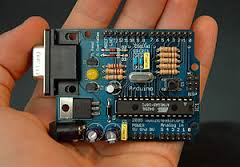
  -  First of all we can check at the following link the presentation the students have prepared about how to work with a base plate or circuit board in order to connect and program the robot ( the robot we will take to Czech Republic to show ) and its functions :


                                                            CIRCUIT BOARD PRESENTATION


                                               PRESENTATION ABOUT HOW TO BUILD A ROBOT


                                                     PRESENTATION ABOUT EDISON ROBOTS


    - On the other hand you can watch several videos about what our robot can do  :


                                          Video 1:   https://www.youtube.com/watch?v=FcK5C3PCZKM


                                          Video 2:   https://www.youtube.com/watch?v=v8gScecgtJg


                                          Video 3:   https://www.youtube.com/watch?v=lP7haTTZlK4


4ESO Física i Química : ARTICLE 127 : Normal force and net forces.

4ESO Física i Química : ARTICLE 127 : Normal force and net forces.


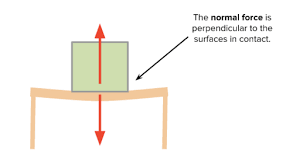
 - We are gonna watch the following videos in order to talk about what a normal forcé is and how we must manage it in relation to work out the net forcé :


  VIDEO 1 NORMAL FORCE


  VIDEO 2 NORMAL FORCE


  VIDEO 3 NORMAL FORCE


  VIDEO 4 EQUILIBRIUM FORCE


4ESO Física i Química : ARTICLE 126 : FORCES AND DYNAMICS.

4ESO Física i Química : ARTICLE 126 :  FORCES AND DYNAMICS.


 - First of all we are gonna check a few important questions about forces in dynamics to understand what it means :

 
    * LINK 1 ABOUT DYNAMICS.

    * LINK 2 ABOUT DYNAMICS.


     * ( Here I’ll post several videos or more links about dynamics in the following days).


  - Make sure that you study and look the following important ítems up :

     1) Forces on an object.
     2) Tension forcé.
     3) Newton's First law.
     4) Inertia and mass.
     5) State of motion.
     6) Balances and unbalanced forces.
     7) Meaning of force.
     8) Types of forces.
     9) Drawing Free-body diagrams.
     10) Determining the net force.
     11) Newton's second law.
     12) Finding acceleration.
     13) Newton's third law.
     14) Hooke's law.
     15) Equilibrium.
     16) Centre of gravity.
     17) Weight.
     18) Types of collision.


4ESO Física i Química : ARTICLE 125 : Forces significance. Different kind of forces.

4ESO Física i Química : ARTICLE 125 :  Forces significance. Different kind of forces.


 - Watch the following videos about so many different kind of forces we can check :


  > Magnetic force.

  > Bridges and sustenance forces.

  > Pressure and forces.

  > Bernoulli and forces.

  > Center of gravity (forces).

  > Balanced forces, equilibrium.

  > Momentum and balanced forces.

  > Centrifugal force.

  > Centripetal force.

  > Centripetal force and uniform circular motion.

  > Levitation and magnetic force.

  > LEVITRON.


4ESO Física i Química : ARTICLE 124 : Forces lesson exam exemple 1.

4ESO Física i Química : ARTICLE 124 :     Forces lesson exam exemple 1.


             MAY THE FORCE BE WITH YOU !!!


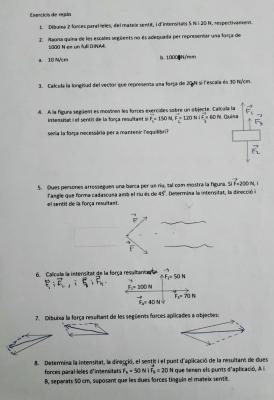
- We’re gonna check first a nice exam example about this lesson and you’ll see how easy is handle or deal with this kind of exercises. You only have to put up with me or bearing me for a while :

(THIS EXERCISES HAVE BEEN TAKEN FROM THE OTHER PHYSICS TEACHER "ISABEL DE LLANÇA" AND HAVE BEEN VERY WELL PREPARED ).


                                     EXAM EXAMPLE 1          

                        EXAM EXAMPLE exercises 1,2,3 and 4 RESOLUTION           
                                           
                        EXAM EXAMPLE exercise 5 RESOLUTION

                        EXAM EXAMPLE exercise 6 RESOLUTION

                        EXAM EXAMPLE exercise 7 RESOLUTION

                        EXAM EXAMPLE exercise 8 RESOLUTION


 - You can follow a nice explanation video about NON CONCURRENT PARALLEL FORCES separated certain distance :


    > Parallel forces exercise with same sense.


   >  Parallel forces exercise with different sense.


  -  After you’ve practiced and watched the different videos, try to do the following exercise by your own. Check previous videos as many times as you need to develope the exercise by yourself. In case you cannot achieve the problem’s solution you have the problem explained at the video below :


  > Exercise :

          A 15kg metal bar 6m long has two objects hanged at the opposite ends of the bar. At the left end of the bar hangs an 20kg object and at the right end of the bar the second 30kg object. Find where exactly the net force must be placed in order not to let the system fall. Work out the value of the net or balance force, the exact spot it must be placed, the direction and its sense.


  > VIDEO WITH PROBLEM’S SOLUTION.