Blogia

EASYFISQUIM , ESO i Batxillerat.

4ESO FQ English 2018-2019. Unit 1 MOTION. Article 3.
4ESO FQ English 2018-2019. Unit 1 MOTION. Article 3.


                                                                         UNIT 1 :    MOTION    ( Lesson 3)          


                                         SECTION 3 , LESSON 1 ( Gravity and free falling motion).

                               (  Free falling object motion or dropping motion  ,  circular motion).


       -  First of all let’s watch a video about what free fall vertical motion is.

          *After watching that video, what do you think are the most important issues
           we have to have on account when approaching and facing a free fall motion
           exercise or situation?.  
          SCAFF 7d :  Fill out the chart .
 
           +Next you’ll find the chart filled in, to check it and correct your answers and
            the way to fill it out. It Will be posted once we achieve yet the activity in class.


       -  Link 1:  Free falling motion introduction website.  Motion’s details and gravity.
       -  Link 2:  Read here what GRAVITY is and what gravity’s acceleration is.

       -  Link 3:  This website has really remarkable information, solved exercises, 
                     diagrams and graphs to learn more about gravity and free fall.

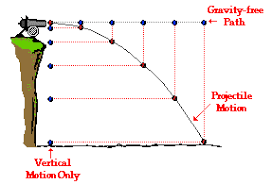
       - Let’s watch this video about how to solve a one dimensión MRUA free fall motion
         ( upwards thrown object motion ) exercise and after watching it 
          we’re gonna work it out again by ourselves.  
         This would be the wording about the problem this teacher is figuring out :

         A kid is placed 20m high from the ground and throws an object upwards with a  
         velocity of 15m/s. Find out the time the object takes to fall and  hit the ground  
         and the final velocity it takes just before hitting the ground.  


        - Let’s just do the same exersice as the previous one above but this time the kid 
          is throwing the object from the same high at the same speed but to the down 
          direction, to hit the ground directly.  Watch the video now in class or at home 
          (follow your teacher’s directions) and we do it later on the board.


          SCAFF 8 :
       -  Pic Activity   :    Check this pic your teacher’s taken showing the equations 
                                  between MRUA (uarm) and free falling motion. Write on your 
                                  notebook what they both have in common and why they have
                                  something different. You’ll need to read the links 1, 2 and 3 from 
                                  above of this lesson to know well what free falling motion is 
                                  about.
                                  You can also get some HELP from this page from your book.


       -  At this point we do exercises 11 and 12 on page 27 from your student’s book.
          Sol :  11 i 12  


       -  Let’s check : Upward thrown object motion exercise example 8 on page 28.


       -  After checking the example, let’s try this one!! :

          A person standing on the edge of a high cliff throws a rock straight up with an initial velocity of 13.0 m/s. The rock misses the edge of the cliff as it falls back to earth. Calculate the position and velocity of the rock 1.00 s, 2.00 s, and 3.00 s after it is thrown, neglecting the effects of air resistance.  
       sol : within LINK 3 above


       - Watch the following pic about Hulk, Spiderman and gravity and have a small
         talk in groups or in pairs to give your opinion about the studied motions involved.

                                                       
                                       SPIDERMAN’S ROLLER COASTER PIC


       -  Now we do exercises 13, 14 and 15 on page 28 from your book.

           solutions :   ex 13     ,     ex 14     ,     ex 15


       -  Link  : Link from the last school years with free falling motion exercises and 
                     examples and videos helping solving this kind of problems.

       -  Link :  Free fall motion complex problem to solve, and solution provided.


                   *  Take a look to this cartoon and discuss what’s involved in it


       - To review the lesson you can try doing the following exercises on page 35 from 
          your book. You are also given the solutions at the following links :

             Exercise 58                           Exercise 59                              Exercise 60


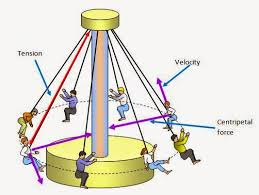
                             UNIFORM CIRCULAR MOTION.


       -  Link 1a:    Uniform circular motion video to start.

       -  Link 1b:    Visualize circular motion agains constant acceleration motion.

       -  Link 2:    Circular motion main equation and information.

       -  Link 3:    Circular motion teacher’s website with physics related to circular 
                        motion.

       -  Link 4 :     Circular motion experience 1 done by last years former students.


                      * Choose one of the following experiences to make:

       -  Link 5a:      Uniform circular motion experience 2 to achieve.
       -  Link 5b:      Uniform circular motion experience 3 to achieve.
                              You can also check the same experience as 5b here in 5c.
       
              +  How to transform or convert degrees to radians and vice versa :

               
                                           Link 1           Link 2        Link 3  

                          Link 4 with teacher’s notes about doing conversion
                          factors from degrees to radians and back.


         MAIN TASK :

        - Once you’ve checked all the materials from this blog and you have already organized your 3 or 4 people group, share responsabilities among your group’s members in order to write a general outline for giving a speech later showing your contents about uniform circular motion, linear velocity, angular velocity, differences among them and conclusions. Don’t forget to give experimental data and examples to substantiate your reasons.


         * If needed you can get help to collect vocabulary and structures to write your text from the quizz and all other materials provided at the blog.


       - You do now exercises 16, 17 and 18 on page 30.

         solutions :           ex 16 and 17               ex18


       - Circular motion exercise from the blackboard .  Wording :

         Some friends are skating around in circles holding by their hands in line. A girl
         at the opposite end of the line is 12m far away from the center of the circle they
         are spinning around. One girl’s friend is closer to the center spinning with an 
         angular velocity of Pi/2 rad/s and a linear velocity of 4m/s.

         Find the linear velocity the girl shows at the Edge of the skating line in a certain
         momento and the distance the boy is placed from the center of the circle.


         *Check the solution here on these two pics :

                
                                          PIC 1                             PIC 2


       - Make a lesson summary like this one appearing on page 31. Do it in english 
         language and try to use your own words.

           - Unit 1 Lesson review pic.


  ORAL PRESENTATION. MOTION ISSUE SPEECH.


        - And now you can check on these files the steps to be followed in order to make  
          and design an oral presentation about one specific motion lesson issue left up
          to you.  On the first file you will find some help, advises and rules to write your
          presentation and some important aspects to keep in mind when you make your
          speech to the audience. At the second one you are provided by information and 
          tips in order to assess your peers’ presentations :


                    1)     First file:   how to prepare your presentation.

                    2)    Second file:   How to assess your peer’s presentation. 


         - Students’ pics for the MOTION ISSUE speeches :

           Diana :   Foto1   Foto 2   Foto 3   Foto 4

           Raúl :     Foto1

           Wiam :   Foto1

           Marco :   Foto1

           Adrian:   Foto1

           Nicole:    Foto1

           Anna:     Foto1

           Dylan:    Foto1

           Aida:      PowerPoint 1


3ESO FQ 2018-2019 : Article 2 : Estats de la matèria.

3ESO FQ 2018-2019 : Article 2 : Estats de la matèria.


                                                                  ESTATS DE LA MATÈRIA.


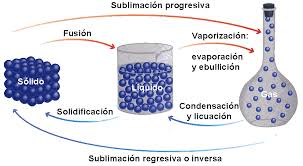
    * CONSULTA AQUESTS   LINK 1 , LINK 2 i LINK 3 PER A CONTESTAR LES SEGÜENTS PREGUNTES SOBRE ELS ESTATS DE LA MATÈRIA  :


   -   LINK 1 sobre els estats de la matèria i què és la matèria i després
       contesta a les preguntes i exercicis de la página     del teu llibre.

   -   LINK 2  és interessant per a estudiar els estats de la matèria.

   -  LINK 3  Aquí tens algunes activitats per a treballar els estats de la matèria.


   - Preguntes a contestar després de veure els links :

   1. Què és la matèria?.
   2. De què tipus de partícules està composta la matèria?.
   3. Quins són els estats de la matèria?.
   4. Quines són les característiques més importants de cada estat de la matèria?.
   5. Què són els fluids?.


    + Ara fes els exercicis 1, 2, 3, 4, 5 i 6 de la página 26 del teu llibre.


   -  Mira aquest VIDEO que explica els estats de la matèria i canvis d’estat.

   - Ves al següent LINK i avalua’t el que saps sobre els estats de la matèria.


3ESO FQ 2018-2019 : Article 1 : Factors de conversió.

3ESO FQ 2018-2019 :  Article 1 :  Factors de conversió.


                                                     MÈTODE CIENTÍFIC.


          - Consulta al següent LINK les etapes principals que cal seguir per a treballar 
            amb el mètode científic.


-----------------------------------------------------------------------------------------------------------------


                                                              FACTORS DE CONVERSIÓ
                                              PER CANVIAR LES UNITATS DE LA DENSITAT.


               - Activitat 1:        Video : què és la densitat ?.


                      a) Mira el següent video i observa com es canvien les unitats 
                           corresponents a la densitat.

                          Si no recordes com fer els factors de conversió més senzills, 
                          mira aquest video.


                      b)  Ara aplica el que has après al següent projecte. Fes grup
                           amb dos o tres companys més de classe per fer-lo junts :

                              Consulta aquesta FOTO del teu profe on trobaràs la massa
                              i el volum d’una molécula d’aigua.  Una vegada tingueu
                              els valors de massa i volum, passeu la massa a grams i
                              el volum a centímetres cúbics i calculeu la densitat 
                              d’aquesta molécula en g/cm3.  Després, amb els factors
                              de conversió que haveu estudiat en l’apartat a), passeu 
                              el valor de la densitat de la molécula a Kg/m3.

                        c)  Per entregar el treball del projecte, feu una mena d’informe
                             en el que aparegui el dibuix de la molécula i el nombre dels
                             àtoms que la formen i els càlculs fets i factors de conversió
                             realitzats i al final el resultat obtingut de la densitat en kg/m3.


         - Aquí pots consultar información important sobre la molécula d’aigua.


         - Aquí tens l’activitat resolta perquè puguis comprovar  els càlculs i
            veure com s’han fet els factors de conversió i els resultats obtinguts
            per a la densitat en g/cm3  i  en kg/m3.


               - Activitat 2 :   L’informe científic.


          - Consulta aquest LINK i mira les parts que ha de tenir un informe.

            Després de fer la pràctica que t’indicarà el professor, fes l’informe
            corresponent. Hauràs de calcular la densitat d’un objecte en g/ml
            i en g/cm3 i en kg/m3 que et donarà el professor.  Una vegada acabada
            la pràctica hauràs de presentar un informe de la mateixa tal com has
            vist al link que se t’ha proporcionat i com també t’explicarà el professor.

            Aquí tens un video de la pràctica que s’ha fet perquè tinguis un
            recordatori del més important que s’ha fet.


---------------------------------------------------------------------------------------------------------------


   - LINK per a repassar TOT el que vulguis sobre com fer factors de conversió amb videos i exemples.


----------------------------------------------------------------------------------------------------------------


                                                                   MATERIAL DE LABORATORI.
                                                                                   Esquemes.


   - Aquí teniu alguns dels esquemes que han fet a classe alguns dels vostres companys sobre el material de laboratori, el seu nom i la seva utilitat :


    + Pissarra de l’Ainoa.

    + Esquema de la Mireia.

    + Esquema de la Carla.


4ESO FQ English 2018-2019. Unit 1 MOTION. Article 2.

4ESO FQ English 2018-2019. Unit 1 MOTION. Article 2.


                                                                       UNIT 1 :    MOTION               


                                                              SECTION 2 , LESSON 1,  MRUA.
             ( Moviment rectilini uniformement accelerat, Constant or uniform acceleration motion ).


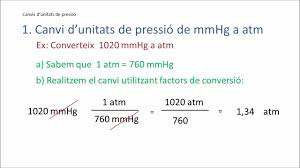
       -  Converting units with conversion factors review.  

                                                         ( Do the unit changes suggested in class ).
                                                         ( Corrections of the exercises suggested ).


        - Read the following description about what’s the difference between velocity and acceleration, check also the corresponding equations and try to summarize the main issues at your notebook. Write it down if you agree with it too  :

           
The difference between velocity and acceleration can be drawn clearly on the following grounds: 

The velocity of an object refers to the speed in a specific direction.
Velocity is nothing but the rate of change of displacement. On the other hand, acceleration is the rate of change of velocity  with respect to time.


        + Read now important statements about velocity and acceleration in order to write your notes.

          
       - MRUA main issues explanation.


        SCAFF 6 : - Traffic accident pic and talking.  
                                 File with scaffolding material to talk about the pic.


        - Example 4 pag 23.

        - Make and achieve exercises 8 and 9 on page 23.         Solutions :          ex8             ex9

        - MRUA main equations on page 24.

                          
                                  Teacher’s paper with first MRUA equation’s proof.   X=Xo+Vo.t+1/2a.t^2

                              * Second important equation demonstration.    V^2-Vo^2=2.a.(X-Xo)


        - Example 5 page 24.

        - MRUA graphs.  Fig 11 page 25 graph a-t.

        - MRUA  Fig 12 graph v-t on page 25.

        - MRUA  Fig 13 graph x-t on page 25.

        - MRUA graphs interpretation.


     * Useful links to check to review constant acceleration motion lesson :

    
   - MRUA link 1  ( Video explaining MRUA and main MRUA equations and graphs ).

   - MRUA link 2  ( Several links and videos working on MRUA main issues ).

   - MRUA link 3  ( Acceleration and gravity, linked equations, exercises and examples ).


    - Exercises 43, 44 and 56 and 56end pag 34 and 35.

    - Homework to do for next monday :  ex 45, 46 and 47 on page 34.

    - Exercise MRUA to achieve , quadratic equation to get time.

    - Example 6 pag 26.


     SCAFF 7 :- MRUA graphs text to fill out.  1 , 2 and 3.  ------   Solutions :  1  ,  2   and   3.


    - Exercises 45, 46 and 47 pag 34.
  
    - Exercises 48 and 49 page 34.

    - Exercises 54 page 35 and 10 page 25.


    -  Let’s do this one now:       Exercise to do about working out the time to go over certain 
                                                    distance in MRUA.

        A car starts its movement with a u.r.a.m (MRUA) motion. It’s showing an acceleration of 
       12m/s2.  How much time will it take to cover or go over 625m?.

       Solution:  Check the solution HERE


     + In this Link you have a great help with a website provided in order to be able to create any kind of graph
        you need to show your data ( bar graphs, line graphs, pie charts...).  Just choose your desing, color, 
        back ground and introduce your data and the labels you want to appear on the chart :


                                                  CHART and GRAPH BUILDING WEBSITE.


     - Homework  :

       Look over the   Example 6 pag 26.  where several stages from a MRUA motion are described. 
       Your task for next monday is to prepare an outline or a text using similar explanations but in english to  
       describe what’s happening at the graph but making use of your own words and expressions. 
       Then copy the graph, check the scaffolding  material provided on the last lesson to write your sentences 
       and organize the paragraphs to explain what is shown at the graph and what the numerical calculations 
      and results mean. Prepare a single separated sheet from your workbook to hand it in to your teacher.


       SCAFF 7b : Check this FILE to get some help to do the homework activity above.

       SCAFF 7c :  Check this FILE to fill out 2 grids which will help you a lot to write your essay or writing
                               about Example 6 above.


      - Do now exercises 51, 52 and 53 on page 34 and later exercise 57 on page 35.

                                   Solutions :           ex 51 part1  ;   ex 51 part 2

                                                                 ex 52 and 53 on page 34

                                                                 ex 57 on page 35


4ESO FQ English 2018-2019. Unit 1 MOTION. Article 1.

4ESO FQ English 2018-2019.   Unit 1  MOTION.   Article 1.


                                                                      UNIT 1 :    MOTION               


                                                              SECTION 1 , LESSON 1,  MRU.
                                    ( Moviment rectilini uniforme, Linear straight uniform motion ).


         * Exercises wordings of whole UNIT 1  :    1      2      3      4      5      6      7

                                                                                 8      9    10    11    12     


                                > Solutions to exercices 30 to 3233 , 34 and 35.

                                > Solution of ex3 from section 2 :   solution


        -  Subject introduction, units, class organization and working class issues.

        - Kinematics, distance and displacement videos.


                                                             PHYSICS CLASSROOM WEBSITE.


    SCAFF 1 :  This file provides you with enough vocabulary to explain what
                       is this subject going about. Use it and write down a couple of 
                       sentences in your note book.


     - How to say "entregar un trabajo" :

       to turn in or hand in something, such as a school assignment, paper, etc., to someone. They were told to pass their papers in to the teacher.


     - How to say "pasa estos papeles o hojas a los demás" :

       Please, pass these sheets out.  Pass them out, please!!


        - Speed and velocity example pic ( from book page 19 ).

         Speed :  Just as distance and displacement have distinctly different meanings (despite their similarities), so do speed and velocity. Speed is a scalar quantity that refers to "how fast an object is moving." Speed can be thought of as the rate at which an object covers distance. A fast-moving object has a high speed and covers a relatively large distance in a short amount of time. Contrast this to a slow-moving object that has a low speed; it covers a relatively small amount of distance in the same amount of time. An object with no movement at all has a zero speed.

        Velocity :  Velocity is a vector quantity that refers to "the rate at which an object changes its position."
                         Velocity is a vector quantity. As such, velocity is direction aware. When evaluating the velocity of an object, one must keep track of direction. It would not be enough to say that an object has a velocity of 55 mi/hr. One must include direction information in order to fully describe the velocity of the object. For instance, you must describe an object’s velocity as being 55 mi/hr, east. This is one of the essential differences between speed and velocity. Speed is a scalar quantity and does not keep track of direction; velocity is a vector quantity and is direction aware.


       Velocity is a vector expression of the displacement that an object or particle undergoes with respect to time .

       The standard unit of velocity magnitude (also known as speed ) is the meter per second (m/s). Alternatively, the centimeter per second (cm/s) can be used to express velocity magnitude.


       - Write down now at your workbook or binder the difference between speed and velocity. Just try to use your own words to highlight the difference. Use the following scaff 2 exercise to get some expressions in order to write down the difference between speed and velocity.
         
         SCAFF 2 File providing expressions to say the difference between two
                          concepts or issues.


        - What position is :
 
                             Position is a place where someone or something is located or has been put. In physics, position is usually a number on an axis.
                             Position is a vector, because direction matters. But distance is a scalar. Distance is how far you’ve traveled. In order to know the posicion an object takes we need a fixed frame of reference to compare different points or spots,  starting point with final point.


                                                                - Frame of reference 1.

                                                                - Frame of reference 2.

                                                                - Reference frame video.

                                                                - Video about what position is.

   
    - As homework or for you to review these concepts, just check the following link at home, watch the videos and rewrite the main issues on your workbook or binder :      

                                                    Link to review position, distance and displacement.


        - Distance and displacement example.


       SCAFF 3 :         Vocabulary 1 activity. ( Solution ).  
                                 Different ways to say getting a solution.


       - We correct exercise 1 from page 17 (homework).


  -  We’re considering now 3 important issues related to motion. Just discuss 
     about them with your peers :

     a) Read the first paragraph on page 17 and write down in your notebook why 
         it says movement is relative.

     b) Read the second paragraph on page 17 and explain why  mobile is called 
         point mobile.

     c)  Read paragraph 2.1 on page 17. What is a trajectory?  
          Draw a few examples.

          A trajectory is the path a moving object follows through space as a function of time.


            - Solved displacement example from page 18.

            - Do now exercises 2 and 3 from page 19.
               Remember that :    

                         Displacement is a vector quantity that refers to "how far out of place an object is";
                         it is the object’s overall change in position.

                        Distance is a scalar quantity that refers to "how much ground an object has covered"                                during its motion.

                           Position of someone or something is the place where they are in relation to other                                        things.


   * Today we:

   - Review MRU  Linear straight uniform motion equations.

   - Study MRU v-t graphs.

   - Study MRU x-t graphs.

   - MRU movement equation exercise example 2 from page 20.


         - Now you do exercises 4 and 5 on page 21.


     SCAFF 4 File providing vocabulary and expressions to explain the main
                        parts of a graph or talk about what graphs are showing.
                        Do the exercise suggested in this scaff 4 activity.


    - We’re checking crossing mobiles motion graphs.

    - Lets see how exemple 3 on page 22 has been done.

    - Example 3 made by hand.


        - Now you do exercises 6 and 7 on page 22.


    - Do now exercises 33 on page 32,   and 34, 35 and 40 on page 33.

       Check this link to wath an animation about how 2 mobiles meet and cross each 
       other.


     - Next you are gonna have here a bunch of links to review some of the issues done until now:


            1)  Reviewing VECTORIAL AND SCALAR MAGNITUDES.
            2)  VECTOR’S PARTS 1  and VECTOR’S PARTS 2.
            3)  MOTION AND TRAJECTORY.
            4)  KINDS OF TRAJECTORIES.
            5)  FRAME OF REFERENCE.
            6)  SPEED AND VELOCITY.
            7)  MRU (LINEAR STRAIGHT UNIFORM MOTION).
            8)  Extra MRU EXERCISES TO DO.
            9)  Old videos explaining MRU in an easy level.
           10) Huge amount of MRU solved exercises to practice.
           11) MRU experiments you can check.

    SCAFF 5 : 12) Expressions to say…."solve for it". 
                                ( solve for it = despejar la x ( solve for x ) … o lo que sea )


      - More meeting point exercises to practice:

             1) Exercise 41 pag 33
             2) Additional MRU crossing and chasing mobiles exercises :
                     
                    Additional 1          Additional 2          Additional 3          Additional 4


        - Simple mind map to sum up MRU. Follow this link to build your 
           simple mind map.


       - Now at the end of this unit you can check next some other activities the students from previous school years did about MRU :

 
                         -  MRU 1
                         -  MRU 2
                         -  MRU 3
                         -  MRU 4
                         -  MRU 5
                         -  MRU 6
                         -  MRU 7
    SCAFF 5b MRU 8
                         -  MRU 9
                         -  MRU 10
                         -  MRU 11
                         -  MRU 12
                         -  MRU 13
                         -  MRU 14
                         -  MRU 15
                         -  MRU 16
                         -  MRU 17
                         -  MRU 18


4ESO Mates Flex III, 2018-2019 : Article 1 , Unitat 1

4ESO Mates Flex III, 2018-2019 :  Article 1   ,   Unitat 1


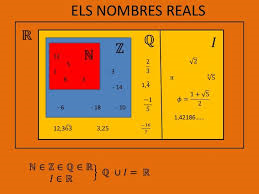
                                      - Unitat 1a :  Nombres reals i percentatges.


            Pics :    1          2          3          4          5          6          7          8          9

                         10       11        12        13        14        15        16        17        18

                         19       20        21        22        23        24        25        26 


            pags :   ex 18 pag 14
                          ex 20 pag 14
                          ex23  pag 15


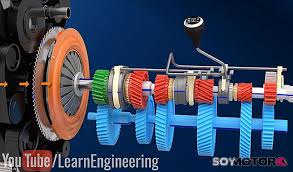
Fricció, com funciona l'embragatge d'un cotxe.

Fricció, com funciona l'embragatge d'un cotxe.


    *   Video aclarint com funciona l’embragatge d’un cotxe per a transmitir o no la potencia del motor a les rodes.


El transistor, un dels invents més importants del darrer segle.

El transistor, un dels invents més importants del darrer segle.


     -  Video sobre el descobriment del transistor i la recerca sobre els semiconductors en estat sólid.